


Search has already shifted in 2026, and most websites are still optimising for how it worked last year. The gap between what works now and what worked before is widening, and businesses that don’t adapt are already losing visibility.
2026 introduces new challenges – from AI-driven search to increased emphasis on content quality and trust signals.
In this blog, we’ll explore SEO trends in 2026 that are shaping digital marketing, and what you can do to adapt quickly. Follow these trends to keep your SEO strategy aligned with how search is evolving and maintain your competitive edge.
Key SEO Trends in 2026
1. The AI Search Revolution (Optimising for AI Search)

AI-driven search is one of the biggest new SEO trends of 2026. The rapid adoption of tools like ChatGPT and Google’s AI-powered search results means SEO isn’t just about traditional search engines anymore. People are increasingly asking questions to AI chatbots and voice assistants, which often provide direct answers.
This leads to more zero-click searches and fewer obvious traffic sources, as users get information without clicking through to websites. In fact, some marketers refer to this as ‘search everywhere optimisation’ – ensuring your brand is visible on all platforms, not just on Google.
To capture traffic in the AI era, you should focus on strategies that help your content get featured as answers:
- Your content must provide direct, concise answers to common questions in your content. This increases the likelihood that your content will be surfaced or referenced in AI-generated results and voice assistants.
- Prioritise quality over quantity of content. High-quality, unique content is more likely to be picked up by AI engines and voice search than generic material.
- Add structured data or schema to your pages. Schema markup gives context to search engines and may improve your visibility in AI-driven results.
- Focus on conversational keywords and questions. Optimise for longer, natural language queries that people might speak or type into AI tools. This aligns your content with the way AI-driven queries are phrased.
2. E-E-A-T and Content Quality Matter More Than Ever
Google’s emphasis on E-E-A-T – Experience, Expertise, Authoritativeness, Trustworthiness – continues to increase in 2026.

With AI generating large volumes of content, search engines place even more weight on content that demonstrates real experience and credibility. In practice, this means that quality content created by genuine experts will outrank thin or auto-generated content.
Google increasingly favours sites that demonstrate depth of knowledge and trust – for example, smaller niche blogs with firsthand experience can outrank faceless sites full of AI content. Establishing trust and authority is vital if you want to rise in the rankings this year.
And to adapt to this trend, build E-E-A-T signals into your website and content:
- You must show real expertise and experience by publishing author bios highlighting credentials, case studies, and personal insights. Content written from first-hand experience helps prove your authority.
- Earn trust with quality and accuracy by ensuring your writing is well-researched and fact-checked, free of errors and misinformation. Link out to reputable sources to support your claims.
- Incorporate testimonials and reviews by showcasing customer reviews or expert endorsements. Proving that real people trust your business boosts your credibility.
- Keep your content up-to-date and relevant by regularly updating your blog posts and guides with the latest information. Demonstrating that you stay current in your field adds to your authority.
3. User Intent is King (including micro-intents)
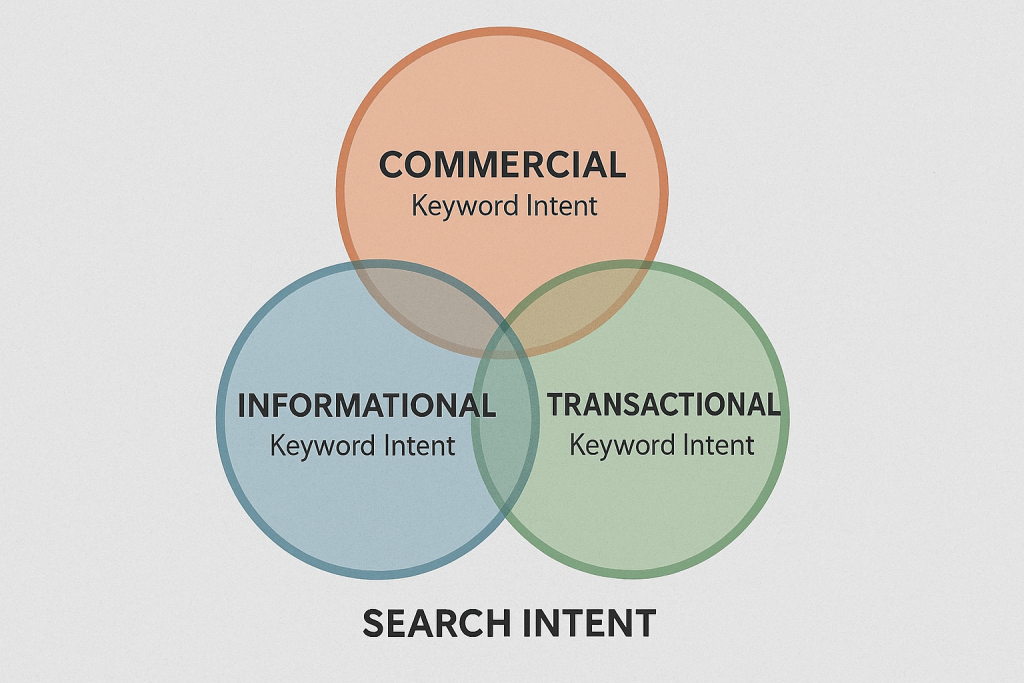
Understanding search intent has always been key to SEO, but in 2026 it goes even deeper. It’s not enough to match a keyword with content – you need to grasp the multiple intentions a user might have when they search a term.
These micro-intents are the specific goals or questions a user may have, even if they search a broad phrase. For instance, someone searching “SEO audit” could be looking for a how-to guide, a free checklist, a software tool, or an agency to do it for them.
Search engines and AI assistants are getting better at tailoring results to a user’s context and past behaviour, meaning results are becoming more context-aware and personalised in some cases. This trend forces businesses to consider all the angles of a query.
To succeed, think from the searcher’s perspective. Before creating a page, ask yourself:
- What does the user really want here?
- What different paths might they take?
Content that addresses a range of user intents will perform better. One effective approach is creating content that answers FAQs, provides options, and guides the user no matter what their end goal is.
By covering a topic comprehensively, you keep visitors engaged on your site regardless of their intent.
4. Content Clustering and Topical Authority
To deal with varied user intents and rank highly, many sites are turning to content clustering.
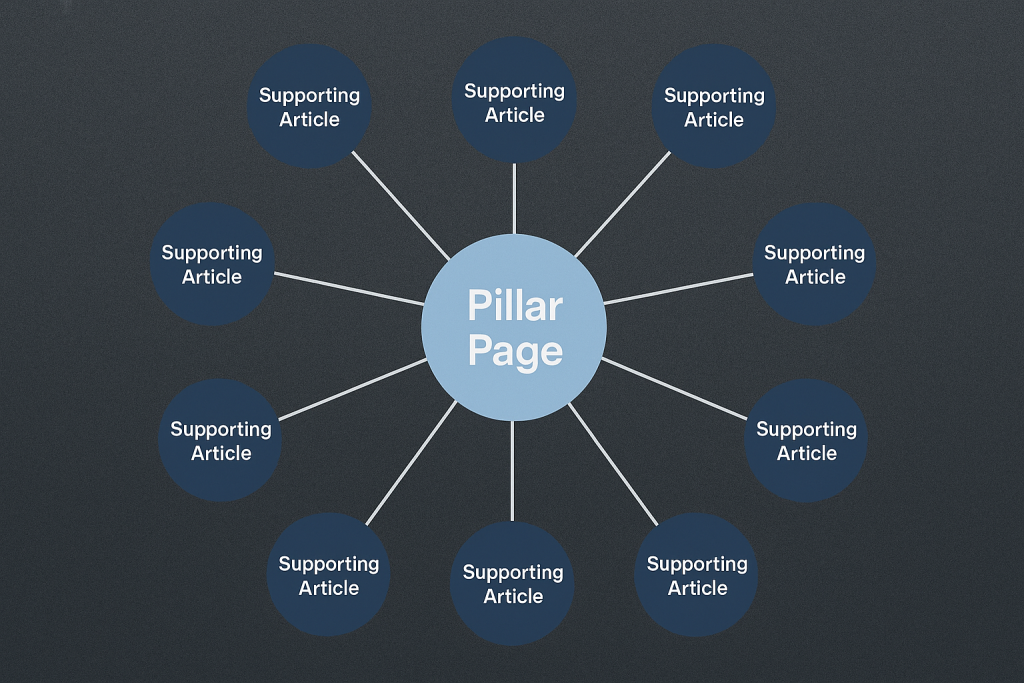
Content clustering means organising your site’s content into topics and subtopics, linking them together as a hub-and-spoke model. This approach continues to be a key SEO trend in 2026.
By creating a main “pillar” page on a broad topic and supporting it with more detailed articles on specific subtopics, you are signalling to Google that you’re an authority in that area. This not only helps with covering micro-intents but also improves your overall relevancy and boosts ranking potential.To leverage this trend, identify the core topics relevant to your business and build out a cluster of content around each.
| For example, if your main topic is “ecommerce SEO”, create subtopic pages for things like “SEO for product pages”, “technical SEO for ecommerce”, “writing ecommerce meta descriptions”, etc., all interlinked. |
By clustering content, you make it easier for search engines and users to navigate your knowledge base – strengthening your topical authority in the process.
5. Leveraging Multimedia (Images, Videos & More)
Today’s search results are rich with multimedia – images, infographics, videos, interactive elements – and users expect engaging visuals. Google’s SERPs often display image packs, video carousels, and other media, which means your content has more chances to shine if it contains diverse media types.

A mix of text and visuals improves both engagement and visibility. In fact, many top-ranking results include some form of multimedia. Not only can images and videos rank in their own right, but they also make your pages more compelling and shareable.
To adapt to this trend, start optimising your content for visual SEO by:
- Incorporating relevant images, diagrams or infographics into your blog posts. Always use descriptive file names and alt text for SEO benefit.
- Create videos (even short ones) that complement your content. You could summarise a blog post in a video or demonstrate a how-to. Then, embed these videos on your pages.
- Consider other media like charts, audio clips, or interactive widgets if they add value.
- Optimise all media files for speed – compress images and host videos on reliable platforms – to ensure they don’t slow down your site.
By adding visual and interactive elements, you not only cater to different user preferences but also increase the likelihood of appearing in rich search features.
6. User Experience and Core Web Vitals Remain Crucial

A timeless trend that only grows stronger is the focus on user experience (UX). Google and other search engines want to deliver results that please users – which means sites that load fast, are mobile-friendly, and easy to navigate have a significant advantage.
Core Web Vitals like loading speed, interactivity, and visual stability metrics are still key ranking signals in 2026. A seamless, intuitive website keeps visitors engaged and sends positive signals to search engines.
On the other hand, if your site is slow or frustrating to use, users will bounce and your rankings can suffer.
To adapt, you should make site improvements that enhance UX and performance:
- Speed up your site by optimising images, use efficient coding, and consider a content delivery network (CDN) to reduce load times. Faster sites rank better and keep users around.
- Go mobile-first by ensuring your site is fully responsive on mobile devices, as the majority of searches occur on mobile, especially voice searches. Test your mobile page speed and usability regularly.
- Improve navigation by making it easy for users to find information with clear menus and internal links. A well-structured site keeps users longer and helps search crawlers index your pages.
- Enhance overall UX through improvements like readable font sizes, accessible design, and the removal of intrusive pop-ups can make a big difference in user satisfaction – and by extension, SEO success.
7. Structured Data for Rich Results (Schema Markup)

Another latest SEO trend in 2026 to embrace is adding structured data to your website. Structured data or using schema markup helps search engines understand the context of your content and can unlock special rich results in the SERPs.
This also extends to AI search – providing clear metadata can make it easier for AI summaries to pull accurate information from your site. Essentially, schema is a way of speaking directly to search engines in their language, ensuring nothing gets lost in translation.
If you haven’t already, start by adding basic schema to important pages like:
- Organisation schema for your business
- Article schema for blog posts
- FAQ schema for Q&A sections
Many modern CMS platforms or plugins can help generate this.
And the payoff is improved visibility: your pages could stand out with rich snippets, and you’re future-proofing for an AI-driven search landscape where context is key.
8. Voice Search Optimisation

With the proliferation of voice assistants in phones, smart speakers, and cars, voice search has become a mainstream way people look up information. It’s no longer a niche behaviour used just for fun – many users routinely ask Siri, Alexa or Google Assistant for answers on the go.
As a result, optimising for voice search is increasingly important, particularly for certain queries. Voice queries tend to be more conversational and question-based than typed queries. They’re often local, such as “near me” queries or specific location questions.
Google’s algorithms have evolved to interpret natural language, so your content must align with that style to capture voice traffic.
To adapt, capture voice search opportunities:
- Use natural language in your content. Include the kind of full-sentence questions people might ask and provide direct answers.
- Optimise for long-tail keywords that mirror speech. For instance, a typed query might be “2026 SEO trends” but a voice query could be “What are the top SEO trends in 2026?”. Try to cover both styles in your content.
- Strengthen your local SEO if relevant to your business. Many voice searches are local, so keep your Google Business Profile updated and include location-specific keywords.
- Ensure mobile-friendliness and speed. Voice searches happen on mobile devices frequently. A fast, mobile-optimised site will serve those users well and improve your chances of being the spoken answer.
By tailoring your SEO strategy to how people speak questions, you’ll be more likely to become the go-to answer that voice assistants read out.
9. Brand Authority and Online Reputation
Building a strong brand presence online has never been more important for SEO. As search algorithms get smarter, they’re evaluating not just what is being said on your site, but who is behind it and how the wider web perceives your brand.

This 2026, brand mentions and online reputation are playing a bigger role in rankings. In fact, unlinked brand mentions are often considered trust signals within broader SEO strategies, almost like “implied links” that boost your authority.
Additionally, with AI-driven search results lacking traditional attribution at times, having a well-known brand or positive reputation can influence whether your content gets recommended by AI assistants.
Treating your brand’s digital footprint as part of your SEO strategy is the answer. You must:
- Encourage brand mentions and discussions. This could mean getting featured in industry publications, collaborating on guest posts, or simply creating share-worthy content that people talk about on social media. Every mention builds recognition.
- Manage your online reviews. Positive reviews on Google, Trustpilot, and industry-specific sites not only improve click-through but also send trust signals to search platforms. Engage politely with reviews and demonstrate great customer service.
- Leverage PR and thought leadership. If possible, have company spokespeople contribute articles or commentary in your niche. Being cited as an expert source builds authority.
- Monitor your reputation. Use tools to keep track of brand mentions and address any negative press or misinformation. Resolving issues and showcasing transparency can turn a potential negative into a positive for your brand image.
The stronger and more trusted your brand appears, the more likely Google and even AI assistants will favour your content when providing answers or results.
10. AI and Automation in SEO Workflows
Last but not least, 2026 is the year SEO professionals fully embrace automation and AI tools to enhance their workflow. With the growing complexity of SEO and the data involved, manual processes just don’t cut it at scale.

In enterprise SEO, automation has become non-negotiable to handle tasks like site analysis, technical audits, and large-scale content optimisation. Even for smaller sites, AI tools like content generators, keyword clustering tools, and analytics AI can save time and uncover insights.
That being said, this creates both opportunity and risk. While AI can greatly assist with research and routine tasks, relying on it too much can backfire – automated content can be generic or incorrect, and Google may devalue low-quality, mass-produced content.
To leverage this trend, use automation smartly and maintain a human touch:
- Leverage AI for efficiency. Tools like ChatGPT can help brainstorm content ideas, meta descriptions, or even first drafts. SEO software can automate reports or monitor rankings in real-time. This frees up your time for strategy and creativity.
- Don’t copy-paste AI content directly to your site. Always review and edit outputs. Ensure the final content has your brand’s voice and accurate information – add insights only a human expert could provide.
- Automate technical checks by implementing automated SEO audits for things like broken links, page speed alerts, or schema errors. Catching and fixing issues quickly will keep your site in top shape.
- Always stay in control. Think of AI as your assistant, not a replacement. Use it to augment your decision-making – for example, to analyse large datasets or predict trends – but continue to apply expert judgement to everything you implement.
By blending human expertise with smart automation, you can scale your SEO efforts while maintaining quality, which is the winning formula in 2026.
Bottom Line: Stay Ahead of the Curve in 2026
The latest SEO trends of 2026 all point to one thing: search is evolving, and marketers must evolve with it. From AI-driven search results to user-centric content and technical enhancements, there’s a lot on our plates – but each trend is an opportunity for those who adapt swiftly.
The businesses that win in 2026 will be the ones aligning their SEO strategy with how search actually works – not how it used to. Do this, and you’ll not only protect your current rankings but likely discover new ways to grow your organic traffic.
Need help navigating these SEO trends in 2026? At Seek Marketing Partners, we monitor search algorithm changes and emerging trends closely to keep our clients ahead. Our SEO services are designed to help you implement the strategies above – and tailor them to your business.
If you need a strategy that actually reflects how search works in 2026, get a free SEO audit or speak with our team and work with specialists already adapting to where search is going next.